
RESTORE
John 11:1–44
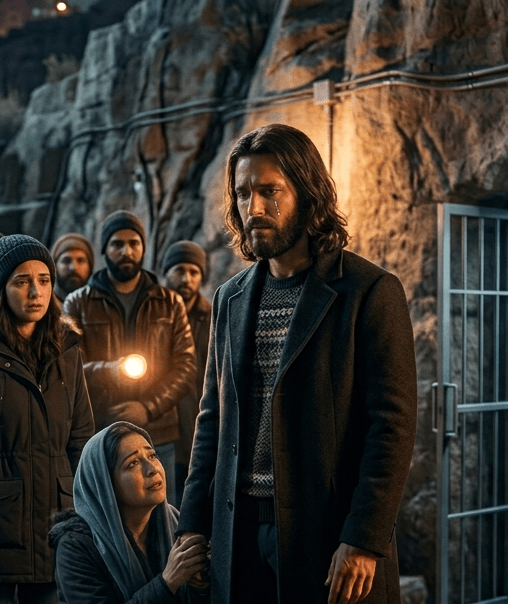
Bethany is not a safe place for Jesus to go.
That matters.
When Jesus says he is going back to Judea, the disciples do not respond with calm trust. They respond with fear: “Rabbi, the Jews were just now trying to stone you, and are you going there again?”
They are not being dramatic.
They are being realistic.
Jesus is a wanted man. He is walking back into the danger zone. He is walking toward a grieving family, yes, but also toward the place where power is already closing in around him.
So from the very start, this story is not just about Lazarus.
It is about love that risks something. It is about a Christ who does not stay far away from pain because it is dangerous, messy, or politically costly.
And when Jesus finally arrives, Lazarus has been dead four days.
John makes sure we hear that detail. Four days. Not one. Not two. Not three. Four.
In the world of that story, this means there is no mistaking the reality of death.
This is not a close call.
This is not a faint pulse.
This is not a body still warm.
Lazarus is gone.
The body has begun to break down. The grief has settled in. The mourners have gathered. The loss is real.
And that is where Jesus meets them.
Not before the loss. Not before the tears. Not before the funeral customs begin. He meets them in the middle of grief.
That can be hard for us. Because many of us want a God who gets there early. We want a God who fixes things before they fall apart. We want a God who prevents the diagnosis, stops the accident, saves the marriage, lifts the depression, protects the child, and keeps death outside the door.
BUT THIS STORY DOES NOT GIVE US THAT KIND OF EASY FAITH.
The key question is not “did this happen?” but “what is this story true about?”
(Bethany — House of the Poor) are not accidental. They form a theological architecture: the God who helps the poor and oppressed, the God of those on the margins, is the God who raises from death.
Marcus J. Borg
Borg emphasizes the metaphorical surplus of the Lazarus story. Whether or not it records historical fact, he writes, “the way it is told points to a more-than-historical meaning.” The real meaning is an awakening to life unlimited — what Borg calls “the way out of a life of bondage.”
For Borg, the two key questions for any Bible story are: What does this say about God? And what does it say about us?
The story of Lazarus is a sign pointing toward a greater reality.
Jesus does not rush. He delays. And John tells us that the delay is not because Jesus does not care. In fact, he tells us the opposite: Jesus loved Martha and her sister and Lazarus. And because he loved them, he stayed two days longer.
That is a hard word. But maybe it is an honest one.
Because many of us know what it is to pray and not receive the answer we wanted on the timeline we wanted.
Many of us know what it is to wonder where God was when everything was falling apart.
Many of us know what it is to stand, like Martha, in the place where hope has already been buried.
And yet this story tells us that divine love is not absent just because it is late.
This challenges every theology of divine intervention built on quick answers. God’s love does not operate on human timelines. It operates in the service of deeper purposes.
Jesus arrives after the death. After the tears. After the mourners. After the stone is in place.
And still, he comes.
That is good news for anyone who feels like it is too late.
Too late for healing. Too late for change. Too late for trust. Too late for life to return.
Jesus stands before a sealed tomb and says, in effect: even here. Even here, God is still at work.
And then comes one of the most important moments in the whole gospel: “Jesus wept.”
Not wailed like the mourners. Not performed sorrow for the crowd. He wept. Quietly. Honestly. Fully.
The God we meet in Jesus is not untouched by suffering.
This God does not stand above human pain, giving neat explanations.
This God stands at the tomb and cries.
So when Jesus stands at the tomb, he is not calmly accepting the world as it is. He is grieving it. He is confronting it. He is standing against all that steals life.
Against all the smaller deaths that trap people long before burial: shame, despair, exclusion, fear, addiction, racism, colonial violence, silence, secrecy, and all the systems that tell people to stay buried.
That is why this story matters so much for the church.
Because Lazarus is not only one man in one tomb long ago. Lazarus is also every person who has been bound and hidden away. Every person told to stay small. Every person trapped in grief. Every person who has gone numb. Every person whose spirit has been buried under years of rejection. Every LGBTQ+ child of God taught that they must live wrapped in shame. Every person living under the weight of depression. Every person suffocating under racism, and fear.
And Jesus still calls into tombs.
He cries with a loud voice, “Lazarus, come out!”
And Lazarus comes out.
But notice this carefully: Lazarus comes out still bound.
His hands and feet are tied. His face is wrapped. He is alive, but not yet free.
Because Jesus does not do everything alone.
God as Liberator: The culminating command is to “unbind him and let him go.” God raises. The community liberates. The divine act and the human act are woven together in a way that invites communal participation in resurrection.
That is the church’s calling.
Jesus raises. We unbind.
And that means restoration is communal.
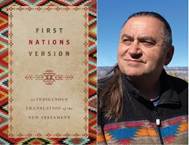
The First Nations Version New Testament (2021), led by Ojibwe and Yaqui translator Terry Wildman
the FNV connects the language of creation care and land deeply with theological meaning — “For God so loved the land…”
In this framework, the raising of Lazarus becomes a story of Creator’s power to restore life to what colonialism, grief, sickness, and death have taken away.
The “unbind him, let him go” command resonates powerfully with Indigenous communities who have experienced generations of cultural, spiritual, and physical death through colonization — and who understand the call to participate in unbinding as communal work, not merely individual.
There are some changes we cannot make by ourselves. There are some healings that only happen in relationship. There are some stones we cannot roll away alone. There are burial cloths we need help removing.
That is true spiritually. It is true emotionally. It is true socially. It is true politically.
A person can hear Christ’s call to life and still be wrapped in old fear.
A congregation can say it believes in resurrection and still leave people bound by judgment.
A society can celebrate freedom in theory while keeping people tied up in systems that choke dignity and joy.
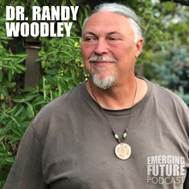
Randy Woodley, Cherokee theologian and professor at Portland Seminary, argues that Indigenous theology operates from a fundamentally relational and community-centered worldview that challenges Western individualism in reading texts like John 11.
Where Western Christianity focuses on personal salvation and individual resurrection, Indigenous frameworks emphasize the community as the body through which healing and restoration flow. “Unbind him, and let him go” is not addressed to Lazarus — it is addressed to the gathered community. The restoration of one person to life is a communal act.
The question is , “Are we willing to help unbind them?”
The kind of church where reconciliation means more than words? The kind of church where people can breathe again?
And there is also a personal question here.
Where do I need to be unbound?
Where have I accepted the language of death over my life? Where have I said, “It is too late”? Where am I still wrapped in old fear, old guilt, old wounds, old names that do not come from God?
And who can help me?
Today’s scripture tells the truth: some restoration requires other people. We need communities of tenderness. We need people who will stand near the tomb with us. We need those who will help roll the stone away. We need those who will not be afraid of the smell of death, the mess of grief, or the slow work of unwrapping what has held us captive.
Jesus does not restore Lazarus in isolation. He restores him within a community.
That is the word for the church today: restore.
Restore one another gently.
Restore one another honestly.
Restore one another with courage.
Restore one another by refusing to leave anyone bound.
Because the God we meet in John 11 is not a distant God. This is the God who risks danger, weeps at tombs, calls life out of death, and then places holy work in the hands of the community.
And so, beloved, when Christ calls someone out, let us not stand back.
Let us roll away stones.
Let us loosen burial cloths.
Let us make room for life.
Let us be a church of unbinding.
 Reverend Marco Ste-Marie
Leave a comment