
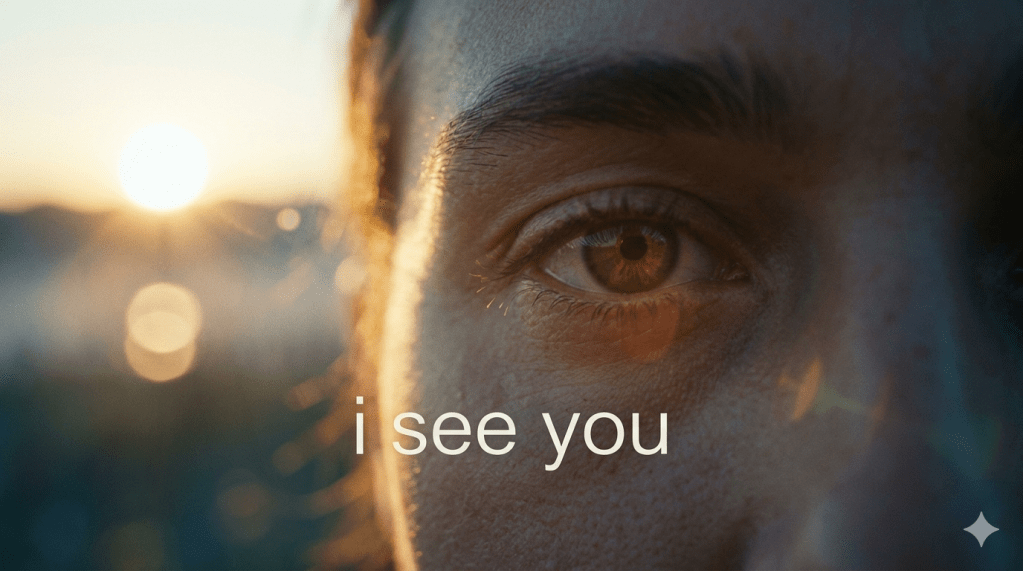
The injustice we can actually touch
Luke 10:25–37
But today i want us to pause somewhere else. Not at the moment when the samaritan helps, but at the moment just before that. I want us to stand for a while with the priest and the levite.
Because they are not cartoon villains. They are not monsters. They are not cruel people laughing at someone’s pain.
They are religious people. They are people with responsibilities. They are people with places to be. They may have had reasons.
Maybe they were afraid. Maybe they thought the robbers were still nearby. Maybe they were worried the man was dead. Maybe they did not know what helping would cost them. Maybe they were tired. Maybe they had already carried too much that week.
In other words, they may have been very much like us.
And that is where the story begins to reach us.
Because the question is not, “could i become a terrible person and walk past someone in need?”
The harder question is, “could i become so busy, so overwhelmed, so used to the pain around me, that i see someone suffering and keep moving?”
What would it have taken for the priest or the levite to stop?
- Maybe it would have taken time.
- Maybe courage.
- Maybe trust.
- Maybe a willingness to be interrupted.
But before all of that, it would have taken one thing: they would have had to see the man on the ground as someone worth stopping for.
Not as a problem.
Not as a risk.
Not as an inconvenience.
Not as someone else’s responsibility.
A person.
That is where compassion begins
Compassion begins with seeing.
Christian life is not only believing the right thing, not only serving, not only praying, not only knowing scripture. It is a whole life of loving god and becoming a neighbour.
This passage also speaks to right relations. It asks: when we encounter wounds caused by history, colonialism, racism, or religious superiority, will we pass by with explanations, or will we draw near with humility, repair, and material commitment?
The parable does not ask the church to feel generous. It asks the church to become trustworthy on the road.
The invitation is to act, but not only to act. It is to see differently.
And that matters here, in this valley.
Because it is easy to feel overwhelmed by the suffering of the world. War. Climate change. Poverty. Racism. Housing crises. Loneliness. Inequality.
The news can make us feel small. We can start to believe that because we cannot fix everything, we cannot do anything.
But jesus does not begin with everything. Jesus begins with one person on one road.
The good samaritan did not fix every dangerous road. He did not end poverty. He did not solve violence. He did not create a whole new health-care system. He responded to the person in front of him.
That may be where change begins most often: not with a grand solution, but with a human decision. I see you.
Here in canmore, in banff, across the bow valley, the road from jerusalem to jericho may look different, but it is still here.
It may look like the person bagging our groceries who cannot afford to live in the town where they work. It may look like the server who brings food to tables in a community where rent is out of reach. It may look like the ski instructor, the cleaner, the hotel worker, the barista, the young family, the senior, the person commuting from cochrane or beyond because the community depends on their labour but does not make room for their life.
These are not abstract issues. These are neighbours.
And jesus asks us to see them.
- Not to solve every housing problem by ourselves.
- Not to carry the whole weight of the valley on our shoulders.
- Not to walk out of church drowning in guilt. That is not the invitation.
The invitation is to let our seeing become more honest.
What would change if we knew our barista’s housing situation? What would change if we knew how far someone had driven before pouring our coffee, cleaning our hotel room, stocking our shelves, preparing our meal, or caring for our community?
What would change if we stopped saying “staffing shortage” and started asking, “what makes it so hard for people to live here?”
The road is closer than we think.
And there is another part of our neighbourhood we must keep learning to see. The stoney nakoda nation is not far from here. Indigenous neighbours are not a distant idea.
Applied to the good samaritan, cone would likely push us beyond charity. The wounded man in the ditch is not merely an unfortunate individual; he represents those whom violent systems leave half dead.
The samaritan’s mercy is solidarity with the oppressed. Cone- would ask not only “will we help the wounded?” But “will we confront the powers that keep wounding them?”
Martin luther king jr. Gave an important corrective: the samaritan’s mercy is necessary, but christian responsibility must also ask why the road is dangerous in the first place.
King argued that true neighbourliness must care for victims and also work to change unjust conditions.
The parable calls us to immediate compassion and systemic repair. We bind the wounds of the person in the ditch, and we also ask who keeps creating ditches, who profits from unsafe roads, and who is repeatedly left vulnerable.
It also invites systemic questions. Why is the road unsafe? Who else is lying there? Who has normalized walking past?
And mercy does not have to begin in a dramatic way.
- It can begin with learning someone’s name.
- It can begin with asking better questions.
- It can begin with supporting local housing solutions instead of resisting them.
- It can begin with checking on someone who seems tired.
It can begin with giving time, making space, changing how we vote, changing how we spend, changing how we speak.
It can begin with the church asking, again and again: who is being left in the ditch while respectable people pass by?
The point is not that we must all do everything. The point is that each of us can do something. And sometimes the something we can do is much closer than we imagined.
The samaritan’s first act was not money. It was not expertise. It was not a perfect plan.
His first act was that he saw.
Then he came near.
That is the movement of mercy: see, come near, respond.
And friends, this is also the movement of god.
The question is not, “do they belong to us?” The question is, “how do we become neighbours to those whom society has left exposed?”
The timeless principle is that love of god cannot be separated from mercy toward the wounded.
The person in need is not an interruption to faithfulness; the person in need is where faithfulness becomes visible.
It speaks to reconciliation, poverty, housing, racism, colonial harm, migration, gender and sexuality, disability, and every place where people are left wounded while respectable society passes by.
Cultural translation today asks: who is our samaritan? In jesus’ story, the samaritan is the person the audience may least want to admire.
For us, the samaritan may be the person outside our denomination, political camp, class, race, religion, or moral comfort zone who nevertheless shows us what mercy looks like.
The passage asks the church to examine its own “passing by.” We may pass by because we are busy, afraid, tired, overwhelmed, institutionally cautious, or worried about getting involved.
The parable does not mock those fears, but it does not let them rule.
God carries what we cannot carry alone. God brings healing through unexpected hands.
Because the good samaritan did not fix the whole world that day.
- He saw one person.
- He stopped.
- He crossed the road.
- He offered care.
And because he did, mercy became visible. Amen.


Leave a Reply